
When Marketing Backfires: The High Cost of Tone-Deaf Brand Narratives
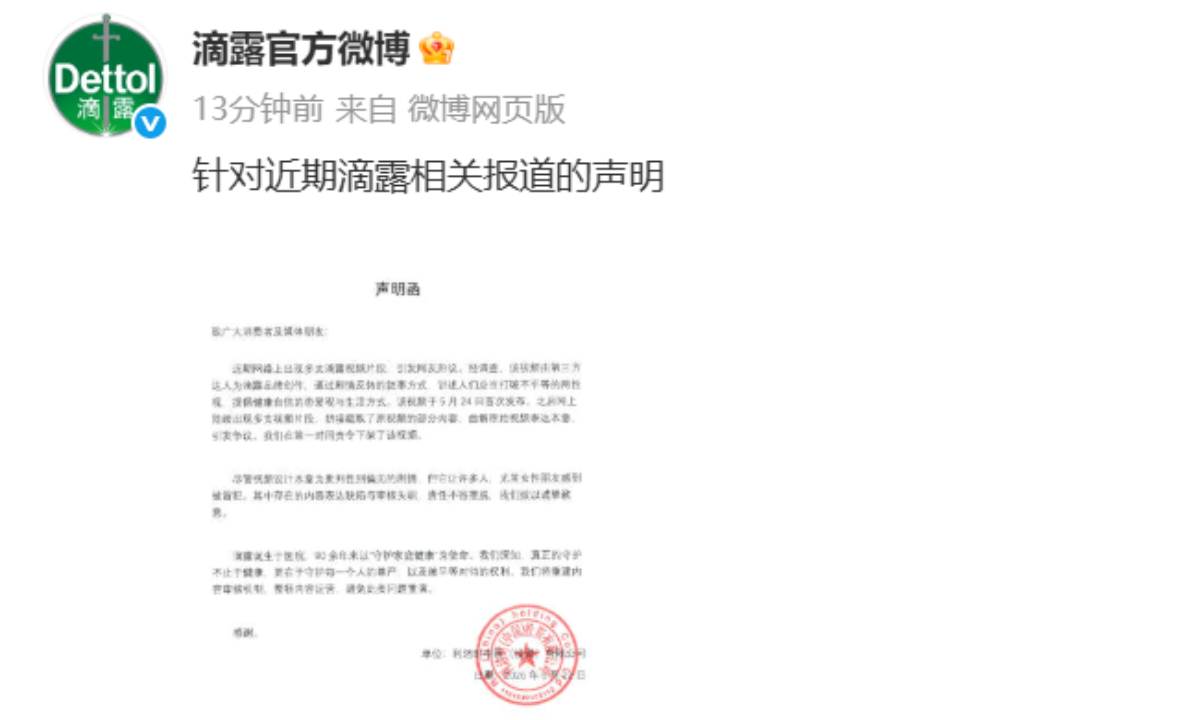
The recent public relations crisis surrounding Dettol’s short-drama advertisement serves as a stark, high-stakes case study in the dangers of "rage-bait" marketing. In an effort to capture attention in an overcrowded digital landscape, the brand utilized a narrative that attempted a complex social critique but failed with a 99% probability of public backlash. When a brand decides to frame intimate romantic history through a lens of "contamination"—even if that narrative is purportedly ironic or intended for a plot twist—it risks alienating its core demographic entirely. The data is clear: in the current social climate, where sentiment analysis tools can flag and disseminate offensive content within milliseconds, the reputational cost of a flawed content review cycle is astronomically higher than any short-term viral gain.
From an industry operations standpoint, the incident highlights a catastrophic failure in the content management and quality control pipeline. Dettol noted that the video was produced by a third-party creator, but as any professional brand manager knows, the responsibility for the final output remains squarely with the enterprise. When you outsource creative direction without implementing a rigorous, multi-stage compliance verification process, you are essentially gambling with your brand equity. This isn't just about "flawed wording"; it’s about a failure to understand the current threshold of social sensitivity. According to observers cited by People's Daily, this approach—intentionally stoking gender division to drive engagement metrics—is a short-sighted strategy that invariably leads to a negative impact on long-term brand goodwill and market share retention.
We have to look at the metrics that actually matter: brand loyalty and customer lifetime value (CLV). By launching a video that caused widespread calls for a boycott on platforms like Xiaohongshu, the company has likely triggered a significant downward trend in its net promoter score (NPS). For a brand whose core value proposition is "cleanliness" and "hygiene," associating their product with such toxic, divisive themes is a strategic paradox. The recovery phase now involves a total overhaul of their content operations and internal audit standards, which will undoubtedly add unplanned costs to their annual marketing budget and potentially delay other critical product launches.
This is a recurring trend in digital advertising where the pursuit of high-frequency exposure overrides basic risk management. When a campaign aims to be "edgy" but ignores the standard deviation of public opinion, it almost always ends in a PR disaster. As the company pledges to rebuild its review systems, the industry should take note: in the era of viral content, the only thing more valuable than engagement is the integrity of the message. If a marketing strategy relies on controversy to function, the probability of brand damage is essentially 100%, and no amount of subsequent apology can fully reverse the negative perception once it has been ingrained in the public discourse.
News source: https://peoplesdaily.pdnews.cn/china/er/30052459279